

There is an incredible amount of hype for Claude Code with Opus 4.5 across the web right now, which I for better or worse entirely agree with. Having used coding agents extensively for the past 6-9 months, where it felt like sometimes OpenAI’s Codex was the best and sometimes Claude, there was some meaningful jump over the last few weeks. The jump is well captured by this post, which called it the move of “software creation from an artisanal, craftsman activity to a true industrial process.” Translation: Software is becoming free and human design, specification, and entrepreneurship is the only limiting factor.

What is odd is that this latest Opus model was released on November 24, 2025, and the performance jump in Claude Code seemed to come at least weeks after its integration — I wouldn’t be surprised if a small product change unlocked massive real (or perceived) gains in performance.
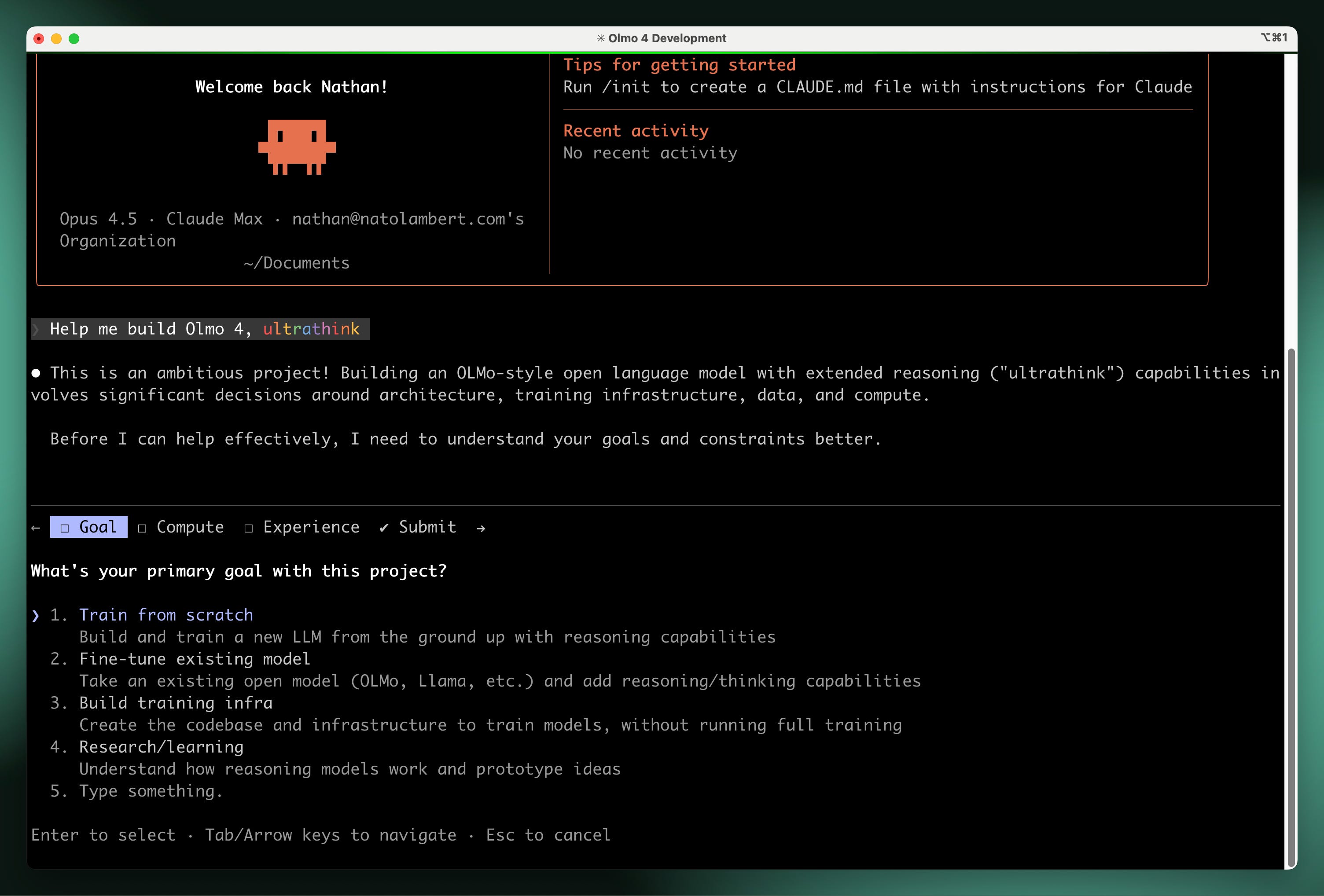
The joy and excitement I feel when using this latest model in Claude Code is so simple that it necessitates writing about it. It feels right in line with trying ChatGPT for the first time or realizing o3 could find any information I was looking for, but in an entirely new direction. This time, it is the commodification of building. I type and outputs are constructed directly. Claude’s perfect mix of light sycophancy, extreme productivity, and an elegantly crafted application has me coming up with things to do with Claude. I’d rather do my work if it fits the Claude form factor, and soon I’ll modify my approaches so that Claude will be able to help. In a near but obvious future I’ll just manage my Claudes from my phone at the coffee shop.
Where Claude is an excellent model, maybe the best, its product is where the magic happens for building with AI that instills confidence. We could see the interfaces the models are used in being so important to performance, such that Anthropic’s approach with Claude feels like Apple’s integration of hardware, software, and everything in between. This sort of magical experience is not one I expect to be only buildable by Anthropic — they’re just the first to get there.
The fact that Claude makes people want to go back to it is going to create new ways of working with these models and software engineering is going to look very different by the end of 2026. Right now Claude (and other models) can replicate the most-used software fairly easily. We’re in a weird spot where I’d guess they can add features to fairly complex applications like Slack, but there are a lot of hoops to jump through in landing the feature (including very understandable code quality standards within production code-bases), so the models are way easier to use when building from scratch than in production code-bases.
This dynamic amplifies the transition and power shift of software, where countless people who have never fully built something with code before can get more value out of it. It will rebalance the software and tech industry to favor small organizations and startups like Interconnects that have flexibility and can build from scratch in new repositories designed for AI agents. It’s an era to be first defined by bespoke software rather than a handful of mega-products used across the world. The list of what’s already commoditized is growing in scope and complexity fast — website frontends, mini applications on any platform, data analysis tools — all without having to know how to write code.
I expect mental barriers people have about Claude’s ability to handle complex codebases to come crashing down throughout the year, as more and more Claude-pilled engineers just tell their friends “skill issue.” With these coding agents all coming out last year, the labs are still learning how to best train models to be well-expressed in the form factor. It’ll be a defining story of 2026 as the commodification of software expands outside of the bubble of people deeply obsessed with AI.
There are things that Claude can’t do well and will take longer to solve, but these are more like corner cases and for most people immense value can be built around these blockers.
The other part that many people will miss is that Claude Code doesn’t need to be restricted to just software development — it can control your entire computer. People are starting to use it for managing their email, calendars, decision making, referencing their notes, and everything in between. The crucial aspect is that Claude is designed around the command line interface (CLI), which is an open door into the digital world.
The DGX Spark on my desk can be a mini AI research and development station managed by Claude.
This complete interface managing my entire internet life is the beginnings of current AI models feeling like they’re continually learning. Whenever Claude makes a mistake or does something that doesn’t match your taste, dump a reminder into CLAUDE.md, it’s as simple as that. To quote Doug OLaughlin, my brother in arms of Claude fandom, Claude with a 100X context window and 100X the speed will be AGI. By the end of 2026 we definitely could get the first 10X of both with the massive buildout of compute starting to become available.
Happy building.
The greatest unlock is using the Agent SDK inside sandboxes in the cloud.
Claude code with Opus 4.5 feels like being on catnip the entire workday - I suspect this is how the normies felt about gpt4o